Rheumatology Bootcamp 101 · October 22 to 25, 2026
Twenty-two hours of live teaching for allied health professionals, taught by two rheumatologists and three ACPAC-trained clinicians. Two virtual evenings, then two days in a Toronto clinic with your hands on the assessment.
Inflammatory arthritis, physiotherapy and exercise
Labs, pharmacotherapy, osteoarthritis
History, joint counts, outcome measures, pain, imaging
Spondyloarthritis, metrology, splinting, guidelines, cases
Who it is built for
You are seeing the swollen MCPs, the 40-year-old with three years of back pain, the psoriasis patient whose fingers have changed shape. The pattern recognition takes years to build on your own. This course compresses it.
Open to PT · OT · RN · RPN · NP · SW · PA · Pharmacist
Community, hospital and private practice. You want a system for separating inflammatory from mechanical, and an exercise and splinting approach that holds up in active disease.
You are counselling patients on DMARDs and biologics and fielding the questions that follow. Labs, monitoring and safety are taught by a rheumatologist.
Monitoring bloodwork and vaccination timing, work disability and psychosocial load, history taking and triage. The sessions that matter to your role are taught by the clinician who does that work.
Either preparing for the program or already carrying an extended-role caseload. The practical days are where the joint count gets calibrated against someone who does it daily.
Where this sits
Bootcamp 101 assumes the foundation and spends its time on the assessment work that an introductory course can cover only in principle.
Arthritis Society CPSIA and Mary Pack ACE. Useful groundwork, largely didactic, and where most allied health clinicians start. Mary Pack ACE specifically includes 14 hours of practical sessions during its in-person classes and is recognised as one of the ACPAC credited pre-courses. Graduates of either register at a reduced rate.
Two days of supervised hands-on assessment with rheumatologists and ACPAC-trained clinicians who carry complex rheumatic caseloads.
Prior introductory training is welcome but not required.
Bootcamp 101 is designed as preparation for the Advanced Clinician Practitioner in Arthritis Care program, the formal extended-role qualification in Canada.
The four days, hour by hour
Every session is live and taught by a named faculty member. The two in-person days run long on purpose: the practical work needs repetition under supervision, and that does not fit an evening.
Refreshments and lunch are provided on both in-person days. Schedule subject to change.
What you take home
Course objectives written as things you do, not topics you were shown.
Faculty
Two rheumatologists and three ACPAC-trained clinicians, all of whom see rheumatic disease every week.
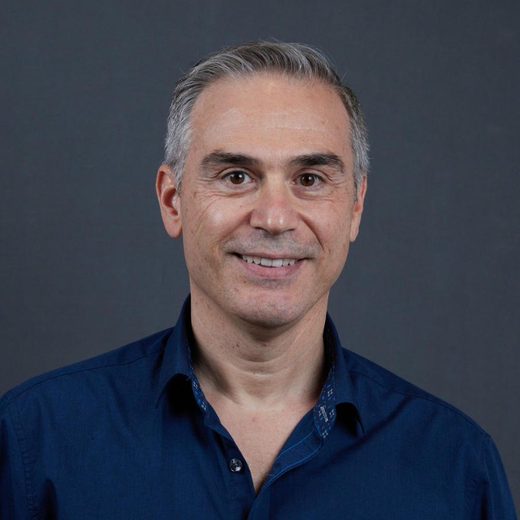




All five faculty teach live. Nothing on the four days is pre-recorded.
From the first cohort
Practical applications relevant to practice. Understanding how the rheumatologist assesses. Key differences between disease processes.March 2026 participant
Getting a full picture overview of assessment and management of rheumatic conditions and getting a better idea of where we fit into the picture.March 2026 participant
Having the up to date best practice guidelines.March 2026 participant
Speaking to, connecting to clinicians in the field.March 2026 participant
Fees and dates
| Who | Until Sept 26 | From Sept 27 |
|---|---|---|
| Standard registration | $995 | $1,095 |
| Recent graduate, 25% off Accredited PT, OT, RN, RPN or Pharmacy program, less than 12 months in clinical practice. Six seats are held at this rate. | $746.25 | $821.25 |
| Mary Pack ACE graduate, 20% off Mary Pack ACE Introductory Assessment and Management Course, virtual or in person. | $796 | $876 |
| Arthritis Society CPSIA graduate, $185 off Completed within the last two years, virtual or in person. | $810 | $910 |
$1,890.50 for two until September 26. $2,080.50 from September 27.
$845.75 per person until September 26. $930.75 from September 27.
All fees are in Canadian dollars and exclude HST. One discount per registration, whichever is largest. Reduced rates do not combine with each other or with the group rate.
To claim a reduced rate, send your documentation to support@rheumacademy.com and we will issue your code. Proof of your registration date for the recent graduate rate, or a certificate of completion for Mary Pack ACE and Arthritis Society CPSIA.
Group rates apply to registrations booked together in a single enrolment. Write to support before you register. Registration closes October 20 and late registrations are not accepted.
Reduced rates are offered for the October 2026 and March 2027 cohorts.
Key dates
Included in the fee
Sending a team? Three or more booked together is $845.75 each at the early rate. Write to support@rheumacademy.com before you register.
No. The course starts at the level of a clinician who sees rheumatic disease inside a general caseload and wants a system for it. Faculty pitch the practical sessions so that a new graduate and a clinician of fifteen years both leave with something they did not have.
No. The two in-person days carry the practical assessment work, which is the part of the course that changes practice. The four days are sold and taught as one course.
A certificate of attendance is issued on successful completion, and the certificate plus the receipt is what most colleges and employers require for a self-directed professional development claim. Check your own college's requirements before you register.
Between 6 and 10 hours of reading and short pre-recorded material, sent after registration. It is there so that Day 1 can start at the clinical question rather than the definitions.
Write to support@rheumacademy.com and we will send a one-page summary written for a manager, with the dates, hours, cost and time away from clinic set out for a professional development request, plus an invoice made out to your organisation.
Email support@rheumacademy.com with your documentation before you register and we will send you a code. For the recent graduate rate that is proof of your registration date with your college. For Mary Pack ACE and Arthritis Society CPSIA it is your certificate of completion. Codes are issued individually, which is also how we hold the six recent graduate seats.
No. One discount per registration, and you take whichever is largest. The rates do not add together, and an individual rate does not stack on top of a group booking. If you are within twelve months of licensure the recent graduate rate is the biggest reduction in every case, including against the group rate.
St George Physiotherapy Clinic, 180 Bloor St. West, Suite 1202, Toronto, ON M5S 2V6. It is a short walk from St George and Museum stations, and there is paid parking in the building.
The early rate holds until September 26, and registration closes October 20.
Register for October